
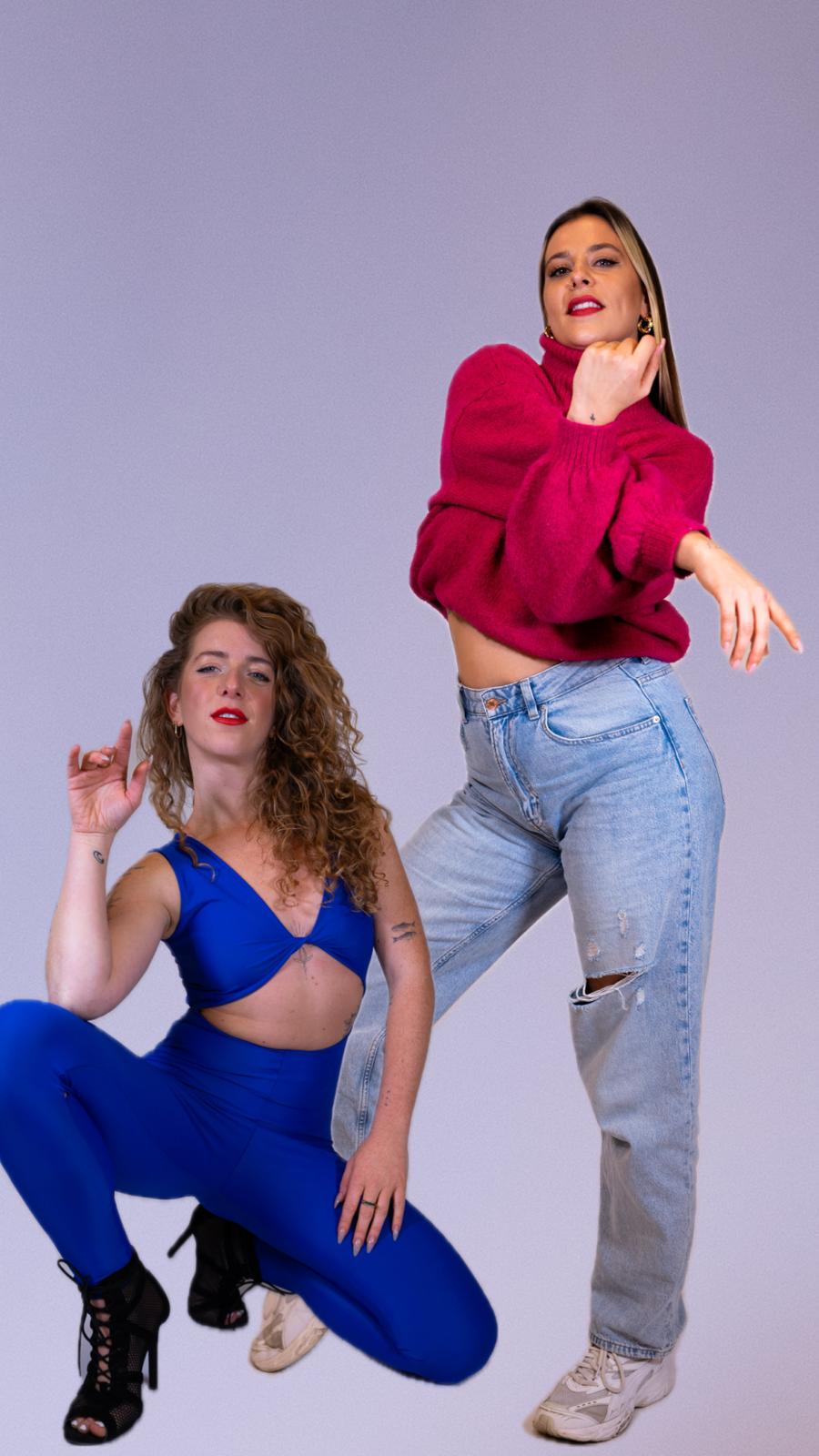
When people search for bachata artists or bachata couples, most results still show a single, traditional format: mixed-gender couples with fixed roles.
At the same time, the current bachata scene includes artists and couples who dance both roles, alternating leadership and following as part of their dance language.
This page brings together visible, active bachata artists and projects that work this way today, on stage, in festivals, and in professional contexts.
This is not a separate category.
It is part of contemporary bachata.
FEATURED ARTISTS
Felipe y Tiago
Felipe y Tiago are an international bachata artist duo known for dancing both roles within the same dance.
Their work, both on stage and in education, shows bachata without fixed roles, where leadership and following are shared and rotated according to music, connection, and intention.
They are the creators of the RoleRotation approach and are recognized figures in festivals and professional dance spaces worldwide.
Fiorella y Linda
Fiorella and Linda are a bachata artist duo working from a shared and flexible partnership, where both dancers alternate roles naturally.
Their work expands visual and artistic references in bachata, offering a contemporary representation of partner dance on stage.
Jessica Latham
Jessica Latham is an international bachata artist and teacher known for her technical clarity and her ability to dance both roles.
Her work emphasizes musicality, precision, and adaptability across different partners and formats, both on stage and in educational settings.
Lisa y Annika
Lisa and Annika work with bachata through a partnership based on shared responsibility and role rotation, where leadership is not assigned to one person.
Their work contributes to broader artistic representation within the European bachata scene.
Myriam y Ronja
Myriam and Ronja are a bachata duo exploring role rotation as part of their artistic language, focusing on connection, musical interpretation, and mutual awareness.
Their work reflects a contemporary approach to partner dance without rigid role structures.
Elena y Dennis
Elena and Dennis integrate role rotation into their artistic work, combining technique, stage presence, and clear communication between partners.
Their approach shows how dancing both roles can be part of mixed-gender partnerships as well.
WHY THIS PAGE EXISTS
Many people search for:
- bachata couples
- bachata artists
- contemporary bachata references
And rarely see projects where:
- roles are not fixed
- both dancers lead and follow
- partnerships do not follow a single traditional format
This page exists to make visible projects that already dance this way, without creating new labels or separating scenes.
FREQUENTLY ASKED QUESTIONS (FAQ)
What does dancing both roles mean in bachata?
It means that both dancers are able to lead and follow, changing roles during the dance depending on the music and interaction.
Are these artists professional bachata dancers?
Yes.
All listed artists and couples work in professional contexts such as festivals, performances, classes, and international projects.
Is this a different style of bachata?
No.
It is social and stage bachata, danced with a flexible role structure.
Why are these couples not always visible in search results?
Because search results have historically prioritized one dominant format.


