
Shared from the Website: https://www.theempowereddancerspodcast.com/ted-18-role-rotation-a-path-to-inclusivity-on-the-dance-floor/
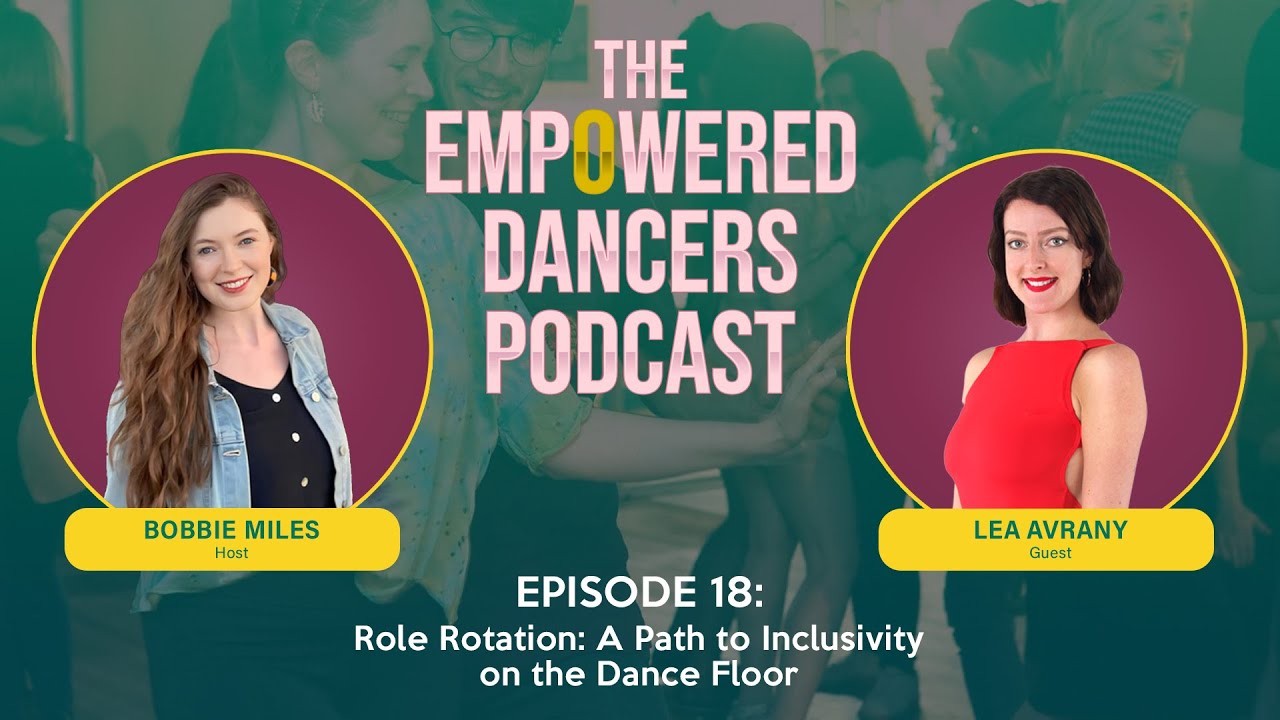
In this episode of the Empowered Dancers Podcast, host Bobbie Miles welcomes back Lea Avrany, an advocate for safer dancing from Switzerland in the bachata scene. The episode explores the concept of rolerotation, where dancers rotate roles mid-dance, enhancing connection and inclusivity. Lea and Bobbie share insights on overcoming traditional dance norms to create a more inclusive and empowering dance community. Lea also discusses her role in creating codes of conduct for dance events, emphasising the importance of understanding both leader and follower roles in dances like bachata to foster empowerment and respect on the dance floor.
You may listen to the complete podcast in the following platforms:
Apple:
https://podcasts.apple.com/gb/podcast/the-empowered-dancers-podcast/id1737190761?i=1000660140552
Spotify:
https://open.spotify.com/episode/2VIHgdYkqwtJKPukQkIY5G?si=rsWr_QbYT9CHCLpc6nureQ
YouTube:
https://youtu.be/3DzYFZAhXls?si=deD8zfOlN1GoxcwM


What to expect in this episode:
(00:00:00) – Introduction
(00:01:18) – Personal Experience with Role Rotation
(00:07:08) – Energy and Comfort on the Dance Floor
(00:12:01) – Practical Benefits of Rotation
(00:14:47) – Overcoming Misconceptions
(00:20:53) – Handling Opposition and Resistance
(00:24:04) – The Impact of Speaking Up
Or Read the Full podcast here:
Bobbie Miles: So, Lea Avrany, you’re also a role rotation instructor. Swapping roles and learning both roles is a big part of your empowerment journey as well, for you and for everyone you teach and engage with. I guess, what are some benefits of having both roles in your dance repertoire?
Lea Avrany: Well, there are so many benefits. You know, in a dance like Bachata, where you have leader and follower roles, that’s also a big problem. It’s amazing to be a follower, and it’s amazing to be a leader, but the issues are not the same for each role. For me, if you dance both, you will educate yourself in both, and many solutions will just come naturally. When you’re a leader, you have to feel what it’s like to follow to understand what you’re leading your followers through. If something makes me uncomfortable as a follower, I won’t lead it.
There are moves I will never lead because, as a follower, I hate them. So, why would I lead them?
For a follower to become a leader, it’s also about understanding what can be tricky, what’s okay, and what’s not okay for setting boundaries. Learning by doing both roles is one of the easiest solutions to this problem. Putting oneself in the other’s shoes helps you understand without needing much explanation. For me, it’s really about feeling empowered first and feeling like yourself as a dancer.
When you dance Bachata or any dance like it, you have to connect with someone else. There are two people minimum. It’s always frustrating if you just dance one role. I’m a dancer; I’ve danced my whole life, often alone, and everything was fine. Then I got into Bachata and was assigned the follower role. It was super difficult to let go, to allow someone else to lead me in moves I might not want to do. Switching off my brain to let someone else do the work was challenging, and it took many years to get over it. Even now, sometimes I think, “No, I don’t want to do this move,” or “This isn’t my musicality; I want to do something else.”
To be a complete dancer, you need to know both roles.
It’s a different experience if you know both. You understand the dance technically much better. You can still prefer one role or the other, but knowing both gives you a fuller experience. Additionally, I wanted to empower myself. At parties, there are often so many followers waiting, and I hated waiting. I have no patience for it, and sometimes it feels like you’re not invited to dance. I wanted to dance more, so I tried leading.
There was also a strange vibe between women at parties. There wasn’t the kind of sorority I expected. Women watched each other, wanting to dance with certain guys next, and I couldn’t dance with my friends. That felt stupid. I wanted to dance with my friends and have fun. Leading allowed me to do that. It’s a whole other level of fun when you dance with your girlfriends.
For me, leading also meant getting my freedom back. I wanted to feel free at dance parties, to dance with everyone, or not, as I pleased. That was the major benefit—feeling empowered and free, not depending on anyone. At dance events, I want to have fun, not be on guard or feel pressured to jump up at the right moment to ask someone to dance. Learning to lead removes that barrier.
You also learn to handle rejection. When I started leading, some people didn’t want to dance with me because I was a girl leading. I’d think, “Okay, too bad for you. Bye.” No ego hurt, it’s just how it is. Dancing both roles means you don’t have your ego hurt anymore because you understand it’s fine.
Bobbie Miles: You can put your comfort ahead of someone else’s ego. You’re not going to hurt someone by saying no. We all experience being told no, and it’s fine. We get over it quickly and find someone else to dance with.
Lea Avrany: Exactly. I learned to receive a “no” when I started leading. Some people didn’t want to dance with me because I was a girl leading. I’d just think, “Too bad for you. Bye.” No problem, no hurt ego. It’s just how it is. When you dance both roles, your ego isn’t hurt anymore because you understand it’s fine.
Bobbie Miles: So, tell us about role rotation.
Lea Avrany: Role rotation is different from just dancing both roles. It’s about being able to naturally switch roles during the dance. You can choose to lead or follow in the same dance. It makes dancing more fun and dynamic because you have to be really connected to understand when the switch is happening. The leader can give the lead, or the follower can steal the lead. It’s a game that makes dancing more fun. You have to be connected and pay attention to each other constantly.
Role rotation also changes the way we think about styling and gender stereotypes. In role rotation, styling is just styling, not men’s or lady’s styling. It’s for everyone. The dance is about the connection between people, not about gender or sexual orientation. It’s about becoming a complete dancer and making the dance scene more inclusive.
Bobbie Miles: It sounds like role rotation makes dancing more inclusive and dynamic. It also seems to challenge traditional gender roles and stereotypes in dancing.
Lea Avrany: Exactly. It makes dancing more inclusive and dynamic. It challenges traditional gender roles and stereotypes. For me, it’s about the values of role rotation, inclusivity, and respect. It’s about dancing, not all the things that sometimes come into the dance world that can be good or bad. It’s about the essence of the dance.
When you dance both roles, you improve your technique and become a complete dancer. After dancing for a few years, I was getting bored. I didn’t want to compete or perform; I just wanted to go to socials. Role rotation brought back the fun and excitement for me. It makes dancing more dynamic and surprising.
Bobbie Miles: We all need a dose of role rotation in our lives.
Lea Avrany: Yes, I’m a firm believer in role rotation. For me, it’s the future. Some people can’t imagine themselves dancing with someone of the same gender or feel uncomfortable with the idea of role rotation. But they’re missing out. I hope this mentality changes with time. Role rotation is just dancing, but it can also change mentalities. I’ve been to events where everyone was dancing role rotation, and it was amazing. It’s my ideal party. I hope one day every social will be like that.
Bobbie Miles: It’s about dancing to dance, not for any romantic or sexual connection. It’s about energy and connection. Some people come with other intentions, but for me, dancing is about connection and having fun.
Lea Avrany: Exactly. It’s about dancing to dance. Some people come with other intentions, but for me, it’s about connection and fun. If I meet new people and feel their energy is off, I might not dance with them. But I’m optimistic and try to give people a chance. Sometimes, it’s just a matter of educating them.
Bobbie Miles: It’s important to stay optimistic. People might come to realize that they should apply the same standards to everyone they dance with, not just around certain people.
Lea Avrany: Yes, that’s my hope. People should think about why someone is advocating for these values. Maybe there’s a need, and slowly, we can spread the word and create a supportive community. I don’t feel alone in this fight. If I had, I might have quit dancing. But I have support, and that keeps me going.
Bobbie Miles: Thank goodness you didn’t quit. You’ve become an empowerment champion. It’s fantastic.
Lea Avrany: Thank you. I believe in destiny and that there’s a bigger purpose behind what I’ve experienced. When I hear people supporting my work, it means something. There were times I felt hopeless, but I kept going.
I believe it’s my fight as a dancer, a woman, and a feminist.
Bobbie Miles: We’re in this together. The more women find their space and voices, the better it will get. Eventually, it won’t be a fight anymore; it will be a process.
Lea Avrany: Yes, that’s the goal.
We all want to feel safe. It’s about creating a safe and loving dance community.
Some people will try to discredit what you say, but there will also be people who support you. It’s about educating people and living according to our values. I want to create a normal where everyone feels safe and included.
Bobbie Miles: Empowerment in the dance scene is growing. Role rotation is becoming more popular, and its values of inclusivity feed back into empowerment and setting boundaries. Thank you so much for speaking with me today.
Lea Avrany: Thank you so much. It was amazing.
Bobbie Miles: Thank you for listening to the Empowered Dancers Podcast. If there’s an aspect of the dance scene you would like to hear about or a particular teacher you would like to hear from, drop me a message, and I will try to make it happen. Make sure you subscribe to get every episode as it comes out. Thank you for the comments and questions you are already sharing. I really appreciate it and look forward to serving you in next week’s episode.

About Lea Avrany
Lea is a Rolerotation certified teacher of social dances like bachata and salsa dancer based in Switzerland. She works with festivals and events to create codes of conduct and action plans and is a wonderful voice in the bachata scene, championing safer spaces and promoting active engagement from the dance community to create a more proactive, supportitve community.
Connect with Lea
Instagram: https://www.instagram.com/cosmic.bailarina/
About Bobbie Miles:
Bobbie Miles is a social dancer based in Bristol. The Salsa, Bachata, and Kizomba scene is special to so many, Bobbie included. The more she danced, however, the more she became aware of inappropriate behaviours in the scene, ranging from low-level “creepiness” to undeniable abuses of power. Bobbie has realised that she will no longer keep quiet, be subjected to any sort of misconduct, and nor should anyone else. She is an advocate for speaking up, boundary setting, and respect in the dance scene. Through The Empowered Dancers Podcast, she promotes transparency, understanding, and accountability and as a public speaker, she talks about putting boundary setting and respect into practice, both on and off the dance floor.
Connect with Bobbie Miles!
Follow me on Instagram @theempowereddancerspodcast
https://www.instagram.com/theempowereddancerspodcast
Follow me on Instagram @bobbiemilesdancer
https://www.instagram.com/bobbiemilesdancer
Find me on Facebook https://www.facebook.com/bobbiemilesbailador
Subscribe to Empowered Dancers YouTube Channel
https://www.youtube.com/channel/UCA8pcAq9lXttVf9w9lDb1bQ?sub_confirmation=1
